
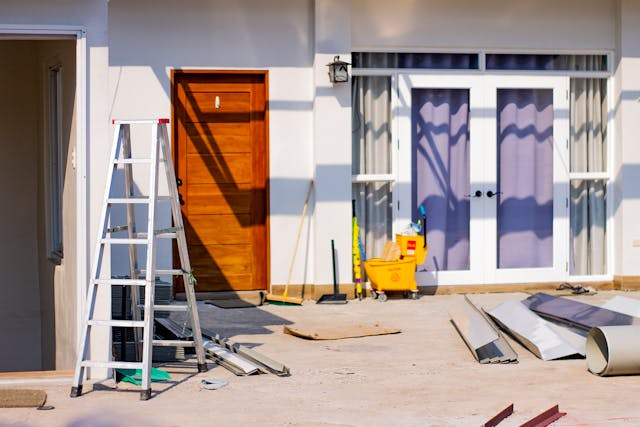
Spend enough time around older neighborhoods—streets lined with century homes, generational family houses, or long-held residential investments—and a quiet pattern reveals itself. Some homes seem to mature with grace. Others, despite repeated renovations, always look like they’re recovering from the last one. That difference rarely comes down to expensive finishes or designer fixtures. More often, it comes down to how deeply the restoration was understood before the work even began.
1. Reading the Spirit of The Structure before Redesigning the Space
Inexperienced remodeling often starts with what people want to see changed. Experienced restoration begins with what the building is already telling you.
Older homes carry structural histories—subtle foundation shifts, framing systems built under different codes, and load paths that weren’t designed for modern open layouts. Jumping straight into visual redesign can create tension between new plans and old structural realities.
General Contractor Indianapolis experts approach these projects almost like investigators; they look for clues: how floors settle across a span, where stress points form in framing, how walls were originally meant to carry weight.
This often leads to strategic interventions like:
- Reinforcing structural members before removing partitions
- Redirecting loads through hidden supports when opening up interiors
- Selecting materials that work with existing structural behavior rather than against it
The homeowner may never see these adjustments. But they’re the reason the finished space feels stable, balanced, and effortless rather than fragile.
2. Protecting Character without Turning the House into a Museum
Homes built decades—or even a century—ago carry something modern construction struggles to replicate: identity:
- Hand-shaped trim.
- Original plaster walls.
- Solid wood doors that have survived generations.
These elements are not simply decorative; they’re pieces of the home’s story.
The mistake many renovations make is assuming these features must be replaced to modernize the space. Experienced restoration specialists know the opposite is often true.
Instead of starting with demolition, they begin with examination:
- Which materials can be restored rather than replaced?
- Which details define the architectural personality of the home?
- Which modern systems align with the classic build, and how can they be introduced without erasing those elements?
In many cases, the smartest move is repair rather than replacement. For example, old-growth wood often outperforms newer lumber with expertise in de-nailing, surfacing, and wood planing to reveal the tight grain, and rot inspection.
The goal isn’t nostalgia. It’s continuity—allowing the house to evolve while still carrying the craftsmanship that made it unique in the first place.
3. Choosing Materials That Age Well Instead of Just Looking New
Refined renovation experts understand that a facelift that looks outwardly like your dream in the first year can become a maintenance burden soon. That’s why they think far beyond the initial reveal.
In this, material selection should never be blinded by trends, but must be guided by expectations and behavior over time.
In practice, this means getting to know critical practical aspects:
- Instead of considering if a material looks good, ask if it performs well under stress.
- Will it hold up in high-traffic areas?
- Does it contribute to indoor air quality or compromise it?
Strategic choices often include:
- Low-emission finishes that keep indoor environments healthier
- Insulation upgrades that reduce long-term energy demand
- Durable surfaces that resist wear rather than needing frequent replacement
Sustainability, in this context, isn’t just environmental responsibility—it’s performance over decades instead of seasons.
4. Designing Around Real Life Instead of Design Trends
One of the most common failures in remodeling comes from designing homes around aesthetics rather than daily routines. Experienced contractors begin with a different question: How does this house actually live?
An intentional contractor will seek to understand critical rhythms of your household- patterns that are a habit- from morning movement through the kitchen, to evening gathering spaces. That helps map areas that naturally attract activity and which one remain unused.
Understanding those rhythms can completely reshape how a renovation unfolds.
For example:
- Opening kitchen layouts so cooking becomes part of social interaction
- Turning unused basements into productive work environments
- Adjusting circulation paths so moving through the home feels natural rather than cramped
When renovations respond to lifestyle rather than trends, the space stops feeling staged and starts feeling intuitive. People often describe these homes with simple language: everything just works.
5. Coordinating the Chaos behind Complex Renovations
Behind every successful restoration sits something most homeowners never see: logistical orchestration. Most homes rarely reveal all their challenges upfront. Once walls open and floors lift, hidden realities emerge—aging electrical systems, plumbing installed decades apart, framing adjustments made by previous owners.
Without strong coordination, those discoveries can derail a project quickly. That is where experienced general contractors become foundational; they function less like builders and more like conductors guiding a complex ensemble of specialists.
Their role involves:
- Aligning electricians, plumbers, carpenters, and finish crews in the correct sequence
- Adjusting timelines when structural surprises appear
- Maintaining communication so homeowners understand what’s happening and why
When coordination is done well, the project feels controlled—even when unexpected issues arise. Without it, renovations spiral into delays, confusion, and budget overruns.
6. Ability to Integrate Ambient intelligence (AmI) With a Balance
This is about introducing technology without overpowering a home. Modern homeowners often want smarter homes—better climate control, efficient lighting, and monitoring systems that make life easier. But technology can easily overwhelm a restoration if it’s added without restraint and wisdom of balance.
Experienced contractors integrate intelligent tech in your home by design, not by gadget. That helps infuse technology as a support system, not a centerpiece.
- Smart climate controls that maintain your custom comfort levels while minimizing energy waste—for example, by lowering the load in unoccupied rooms or pre-conditioning the air before you arrive home.
- Lighting systems that adapt to your biology and arc of the sun
- Environmental sensors that detect moisture or air-quality changes early
When done right, the technology fades into the background. The homeowner simply experiences a house that feels more responsive, more comfortable, and easier to maintain. That way, the craftsmanship remains visible while technology remains subtle.
In essence, when you elevate you home restoration to a strategic operation rather than a reactive repair, you move from “fixing a problem” to “engineering your home as an asset.” A performance-based restoration systematically removes the financial and structural “invisible debt” that typically plagues older or damaged properties.
Also, note that; while most standard contractors focus on the “Reveal”—the visible, cosmetic completion of a project. A strategic, seasoned restoration expert focuses on the Asset Lifecycle, treating the property as a complex life-enhancing system. That means guiding the home so it can adapt to modern needs, remain resilient through time, and evolve without compromising the character, integrity, or long-term performance of the structure itself.